Introduction
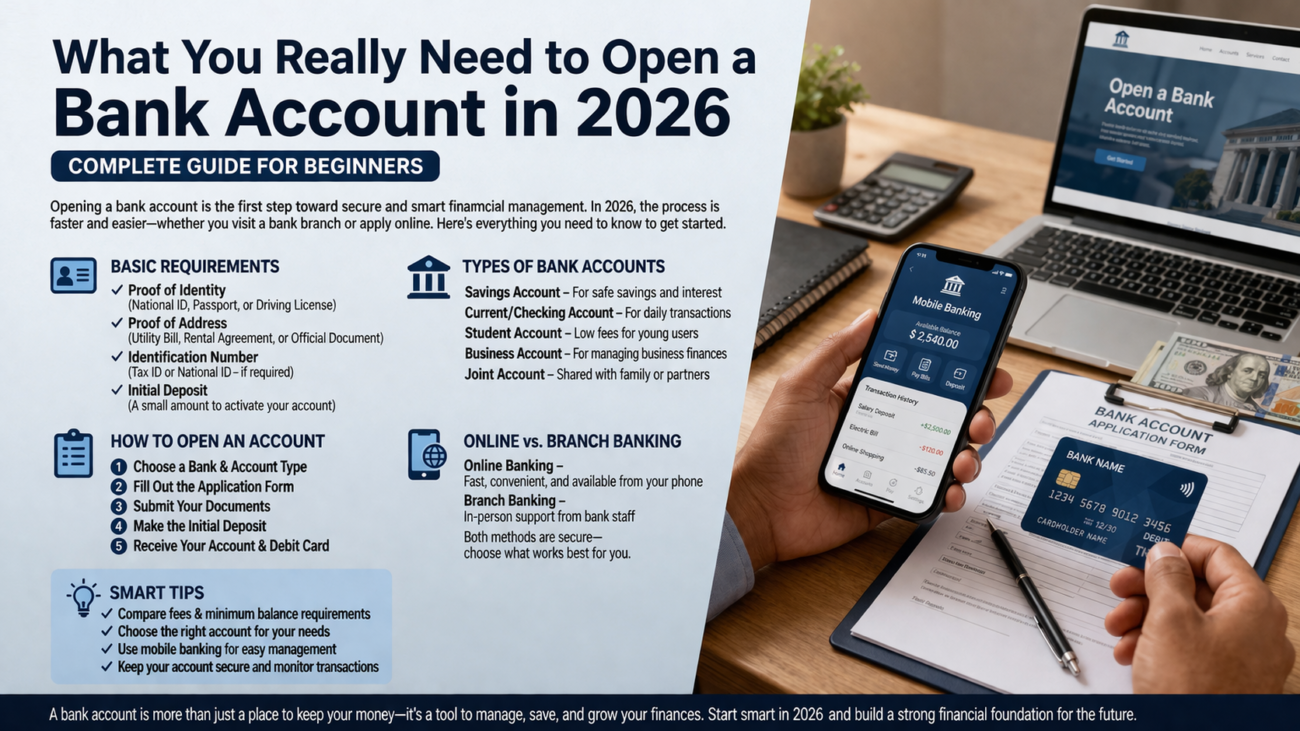
Opening a bank account is one of the most important steps in managing your money, yet many people are not sure what they actually need to get started. In 2026, banking has become easier, faster, and more digital, but banks still require certain documents and information before they allow you to open an account. Understanding the process before visiting a bank or applying online can save you time and prevent unnecessary problems. Whether you are opening your first account, starting a job, running a business, or planning to save money, having the right banking setup is essential for managing your financial life properly.
Why Having a Bank Account is Important
A bank account is not just a place where you store your money. It is the center of your financial life and helps you manage everything from daily expenses to long term savings. With a bank account, you can receive your salary, send money to others, pay utility bills, shop online, and track your spending history. It also helps you build a financial record which becomes very useful when applying for a loan, credit card, or mortgage in the future. In today’s digital economy, living without a bank account is very difficult because most financial transactions are now done online or through banking apps.
Basic Requirements to Open a Bank Account
Banks need to verify your identity and address before opening an account. This is part of banking security and financial regulations designed to prevent fraud and illegal transactions. The first thing you need is proof of identity, which can be a national ID card, passport, or driving license. This document confirms who you are. The second requirement is proof of address, which can be a utility bill, rental agreement, or any official document that shows your current address. Some banks may also ask for your tax number or national identification number depending on the country you live in. In many cases, banks also require a small initial deposit to activate the account. Some accounts require only a small amount, while others may require a higher minimum balance.
Different Types of Bank Accounts
Before opening an account, it is important to understand that not all bank accounts are the same. A savings account is usually the most common type and is mainly used for saving money and earning interest over time. A current or checking account is designed for daily transactions and is commonly used by business owners or people who frequently send and receive payments. Student accounts are designed for young people and usually have low fees and low balance requirements. Business accounts are used for managing business income and expenses separately from personal finances. Joint accounts are shared between two people, usually family members or business partners, and are used for managing shared expenses and savings.
How to Open a Bank Account Step by Step
The process of opening a bank account is now very simple and can be completed either online or by visiting a bank branch. First, you need to choose a bank and decide which type of account you want to open. After that, you fill out the application form and submit your documents for verification. Once your documents are approved, you deposit the required initial amount to activate the account. The bank will then create your account and provide you with account details, a debit card, and access to online banking. In many banks, this entire process can now be completed within one day, especially if you apply online.
Online Banking vs Branch Banking
In recent years, online banking has become very popular because it is fast and convenient. You can open an account from your home by uploading your documents and verifying your identity through a mobile app. This saves time and makes banking much easier. Traditional branch banking, on the other hand, involves visiting the bank, filling out forms, and submitting physical documents. Some people prefer this method because they can talk directly to bank staff and get guidance. Both methods are safe, and the best option depends on your preference and the services offered by the bank.
Common Mistakes to Avoid When Opening an Account
Many people open a bank account without checking important details, which can create problems later. One common mistake is not checking the minimum balance requirement, which can lead to monthly penalties. Another mistake is ignoring hidden fees such as ATM fees, maintenance charges, or transaction fees. Some people also choose the wrong type of account that does not match their needs. It is always a good idea to compare different banks, check their services, and read the terms before opening an account.
Smart Tips Before Choosing a Bank
Before opening your account, take some time to research and compare banks. Look at their fees, minimum balance requirements, ATM availability, online banking features, and customer service quality. A good bank should provide easy online banking, low fees, good customer support, and convenient access to ATMs and branches. Choosing the right bank can make managing your money much easier and more efficient in the long run.
Advanced Banking Tips in 2026 How to Use Your Account Smartly

Understanding Bank Fees and Hidden Charges
Opening a bank account is only the first step, but managing it wisely is what really matters. Many people lose money without realizing it because they do not fully understand bank fees. These can include monthly maintenance charges, ATM withdrawal fees, overdraft penalties, and transaction limits. Some banks also charge for SMS alerts or international transfers. Before using your account regularly, take time to review the fee structure so you can avoid unnecessary deductions and keep more of your money.
How to Maintain Your Account Properly
Once your account is active, maintaining it correctly is very important. Always try to keep the minimum balance required by your bank to avoid penalties. Regularly check your transaction history to make sure there are no unauthorized activities. Keeping your contact information updated is also important so you receive alerts and notifications on time. A well-maintained account not only saves you money but also builds trust with your bank.
Using Mobile Banking and Digital Tools
In 2026, mobile banking has become a powerful tool for managing finances. Most banks offer apps that allow you to transfer money, pay bills, check balances, and even invest directly from your phone. These apps also provide spending insights, which help you understand where your money is going. Using digital banking tools properly can improve your financial habits and make daily transactions faster and more secure.
How to Keep Your Bank Account Safe
Security is one of the most important aspects of banking. With increasing online transactions, it is important to protect your account from fraud. Always use strong passwords and never share your PIN or banking details with anyone. Avoid using public WiFi when accessing your bank account and enable two factor authentication if your bank offers it. Regularly monitor your account activity so you can quickly detect and report any suspicious transactions.
Linking Your Bank Account to Financial Services
A bank account becomes even more useful when it is connected to other financial services. You can link your account to payment apps, online shopping platforms, and investment tools. This allows you to manage all your financial activities from one place. Many people also connect their accounts to budgeting apps that help track expenses and plan savings. Using these integrations wisely can simplify your financial life and improve money management.
When Should You Upgrade Your Bank Account
As your income and financial needs grow, your current account may no longer be enough. For example, if you start a business or begin earning more, you may need a business account or a premium account with additional benefits. Upgrading your account at the right time can give you access to better services, higher transaction limits, and improved financial tools. Always review your banking needs regularly and choose an account that matches your lifestyle.
Banking Habits That Build Long Term Financial Stability
Building a Good Banking History
Many people do not realize that your bank account is not just for transactions, it also builds your financial history. Banks monitor how you manage your account, how regularly money comes in, how you maintain your balance, and whether you avoid overdrafts. A strong banking history can make it much easier for you to get a credit card, personal loan, car loan, or even a home loan in the future. Banks trust customers who manage their accounts responsibly, so maintaining a stable balance and avoiding missed payments can help you build a strong financial profile over time.
Setting Up Automatic Payments and Savings
One of the smartest ways to manage your bank account is to automate your finances. Many banks allow you to set up automatic bill payments, automatic transfers to savings accounts, and scheduled transactions. This helps you avoid late payments and also builds a habit of saving money regularly. Even small automatic savings every month can grow into a significant amount over a few years. Automation makes financial management easier because you do not have to remember every payment manually.
Emergency Funds and Savings Strategy
A bank account also helps you build an emergency fund, which is very important for financial stability. An emergency fund is money saved for unexpected situations such as medical expenses, job loss, or urgent repairs. Financial experts often recommend saving at least three to six months of expenses in a savings account. Keeping this money in a bank account instead of cash makes it safer and easier to manage. Having emergency savings reduces financial stress and protects you from debt in difficult situations.
Using Your Bank Account for Budgeting
Your bank account can also be used as a budgeting tool. By checking your monthly statements and transaction history, you can see exactly where your money is being spent. Many banking apps now categorize expenses like food, transport, bills, and shopping, which makes budgeting easier. When you understand your spending habits, you can control unnecessary expenses and increase your savings. Good budgeting is one of the most important steps toward financial success.
Understanding Interest and Savings Growth
If you are using a savings account, it is important to understand how interest works. Banks pay interest on savings accounts, which means your money slowly grows over time. While the interest may seem small at first, over a long period it can make a big difference. This is why many people keep their extra money in savings accounts instead of keeping cash at home. Some banks also offer high interest savings accounts, which can help your savings grow faster.
When to Open Multiple Bank Accounts
As your financial life grows, you may need more than one bank account. Many people use one account for salary, one for savings, and one for business or online transactions. This helps organize money better and makes budgeting easier. Separating savings from daily spending also reduces the chances of spending money that you intended to save. Having multiple accounts is a common financial strategy used by people who manage money wisely.
Final Advice for Smart Banking
Smart banking is not about how much money you have, but how well you manage the money you have. Good banking habits include saving regularly, monitoring transactions, avoiding unnecessary fees, and planning for the future. If you use your bank account wisely, it can become a powerful tool that helps you build financial stability, avoid debt, and achieve long term financial goals.

Welcome